
When people talk about fashion waste, they often imagine unsold stock, overfilled warehouses, landfill, or garments being destroyed after they fail to sell.
But in reality, waste often begins much earlier.
It begins when a design is approved without enough clarity.
Before a fabric is ordered.
Before a sample is made.
Before production starts.
Before a collection reaches the customer.
In fashion, many important decisions are still made with limited visibility. A sketch becomes a sample. A sample becomes a collection. A collection becomes inventory. And only later does the team fully understand whether the product was commercially strong, financially viable, technically realistic, or aligned with customer demand.
By that point, many costs have already been created.
The Hidden Cost of Early Design Decisions

Every fashion product starts with a decision.
A silhouette.
A fabric.
A colour.
A print.
A supplier.
A price point.
A production quantity.
Each of these decisions affects the final outcome. Yet many teams still need to rely on fragmented tools, manual communication, physical sampling, and subjective approval processes.
This creates a gap between the creative idea and the business reality.
A design may look beautiful on paper but become too expensive to produce.
A material may feel right creatively but increase the environmental impact.
A supplier may be available but not suitable for the product category.
A product may be approved internally but fail to resonate with customers.
The result is not only wasted fabric or unsold stock. It is wasted time, budget, energy, and creative effort.
Sampling Is Necessary, But Not Every Idea Needs to Become a Sample
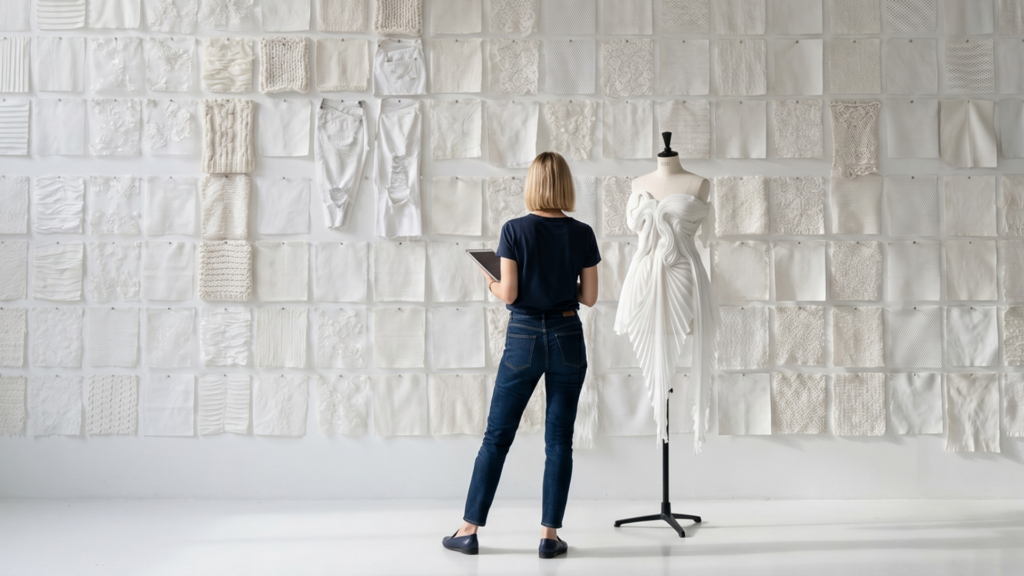
Physical sampling will always have an important role in fashion. Fit, construction, fabric behaviour, hand feel, finishing, print quality, embroidery, and production details still need to be tested in the real world.
But not every early-stage idea needs to become a physical sample immediately.
Many questions can be explored before sampling:
Can the design be visualised realistically?
Does the product direction feel commercially relevant?
Which material direction makes the most sense?
How might cost change depending on fabric, complexity, or supplier?
Could this design be validated with buyers, internal teams, or selected customers before production?
This is where digital validation becomes powerful.
It does not replace the designer.
It does not replace the supplier.
It does not replace physical development.
It helps teams make better decisions before they invest in the next step.
Fashion Needs Better Decision Intelligence
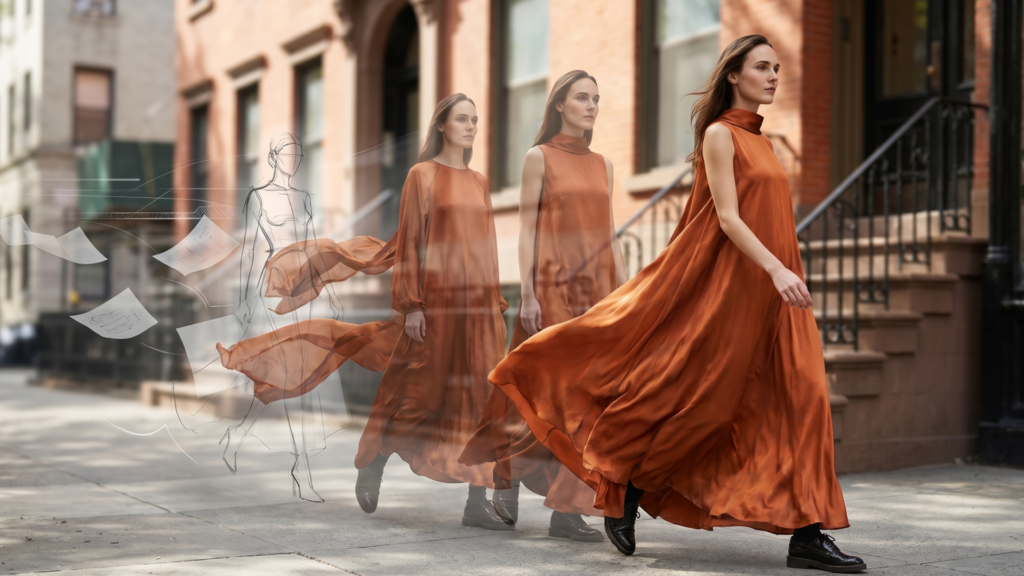
Fashion does not need another tool that only creates attractive images.
Fashion needs better decision intelligence.
At CODRESS, we believe the future of fashion product development will be shaped by tools that connect creativity with business, sustainability, and production realities.
A fashion sketch should not only become a beautiful visual. It should become a smarter decision point.
This means helping teams understand:
- How a design could look before sampling
- Whether a product direction is worth developing further
- How design choices may affect cost and margin
- Which materials or suppliers may be relevant
- How sustainability considerations can be included earlier
- How brands can reduce unnecessary product development loops
The goal is not to slow creativity down.
The goal is to make creativity more informed.
The Industry Is Under Pressure to Change
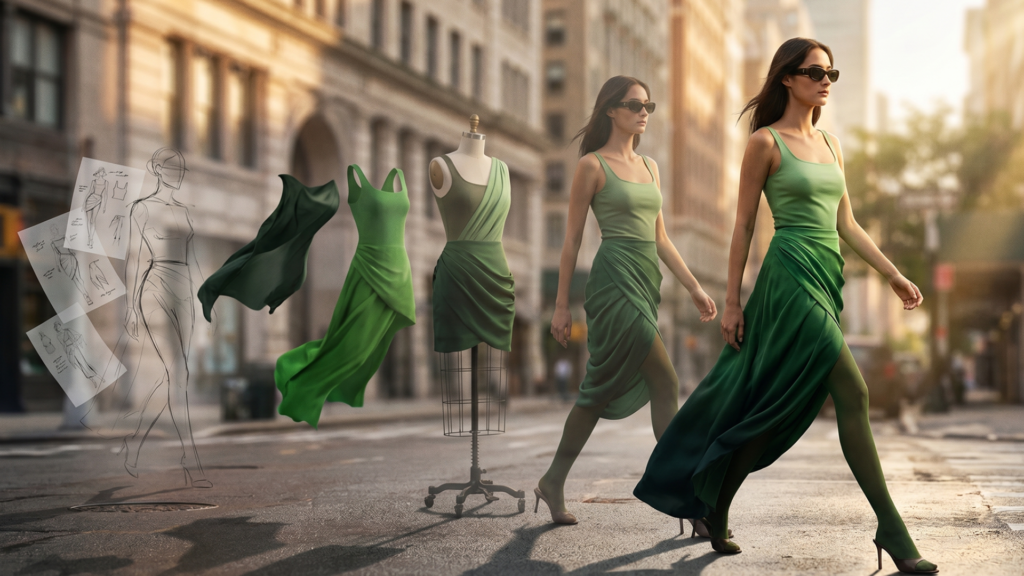
The fashion industry is facing increasing pressure to reduce waste, improve transparency, and make production more responsible.
According to the European Commission, EU textile consumption has one of the highest impacts on the environment and climate, after food, housing, and mobility. It is also among the highest areas of consumption for water, land use, raw materials, and greenhouse gas emissions.
The European Parliament has also highlighted that between 4% and 9% of textile products placed on the European market are destroyed without ever being used.
At the same time, textile-to-textile recycling remains extremely limited. The Ellen MacArthur Foundation has reported that less than 1% of clothing is recycled into new clothing.
These numbers show that fashion cannot solve waste only at the end of the product lifecycle.
The industry also needs better decisions at the beginning.
Why CODRESS Exists
CODRESS was created from a simple observation:
Many fashion decisions are made too late.
By the time a product has been sampled, priced, reviewed, revised, produced, and launched, the room for change becomes smaller and more expensive.
CODRESS helps fashion brands and designers validate product ideas before production by turning sketches into realistic digital visuals and connecting design decisions with cost, sustainability, and supplier intelligence.
Our mission is to help fashion teams move from intuition-only decisions to more informed product development.
We are building CODRESS for:
- Fashion brands
- Designers
- Product development teams
- Buying and sourcing teams
- Manufacturers and suppliers
- Sustainability-driven fashion innovators
We believe that better design decisions should happen earlier, before waste becomes physical.
A New Way to Think About Fashion Innovation
AI in fashion should not only be about speed.
It should not only be about generating more images, more content, or more options.
Used responsibly, AI can help fashion teams ask better questions before committing resources.
Is this product worth developing?
Is this design direction aligned with the brand?
Can we test interest before production?
Can we understand cost earlier?
Can we compare supplier or material directions before committing?
Can we reduce unnecessary sampling without reducing creativity?
This is the space CODRESS is building for.
Not AI instead of fashion expertise.
AI supporting fashion expertise.
Better Decisions Before Production
The future of fashion will not be built only by producing less.
It will be built by deciding better.
Better design validation.
Better material choices.
Better supplier alignment.
Better cost visibility.
Better sustainability awareness.
Better product decisions before production.
Because the biggest waste in fashion may not start in the factory.
It may start the moment a design is approved without enough information.
At CODRESS, we are building tools to change that.